
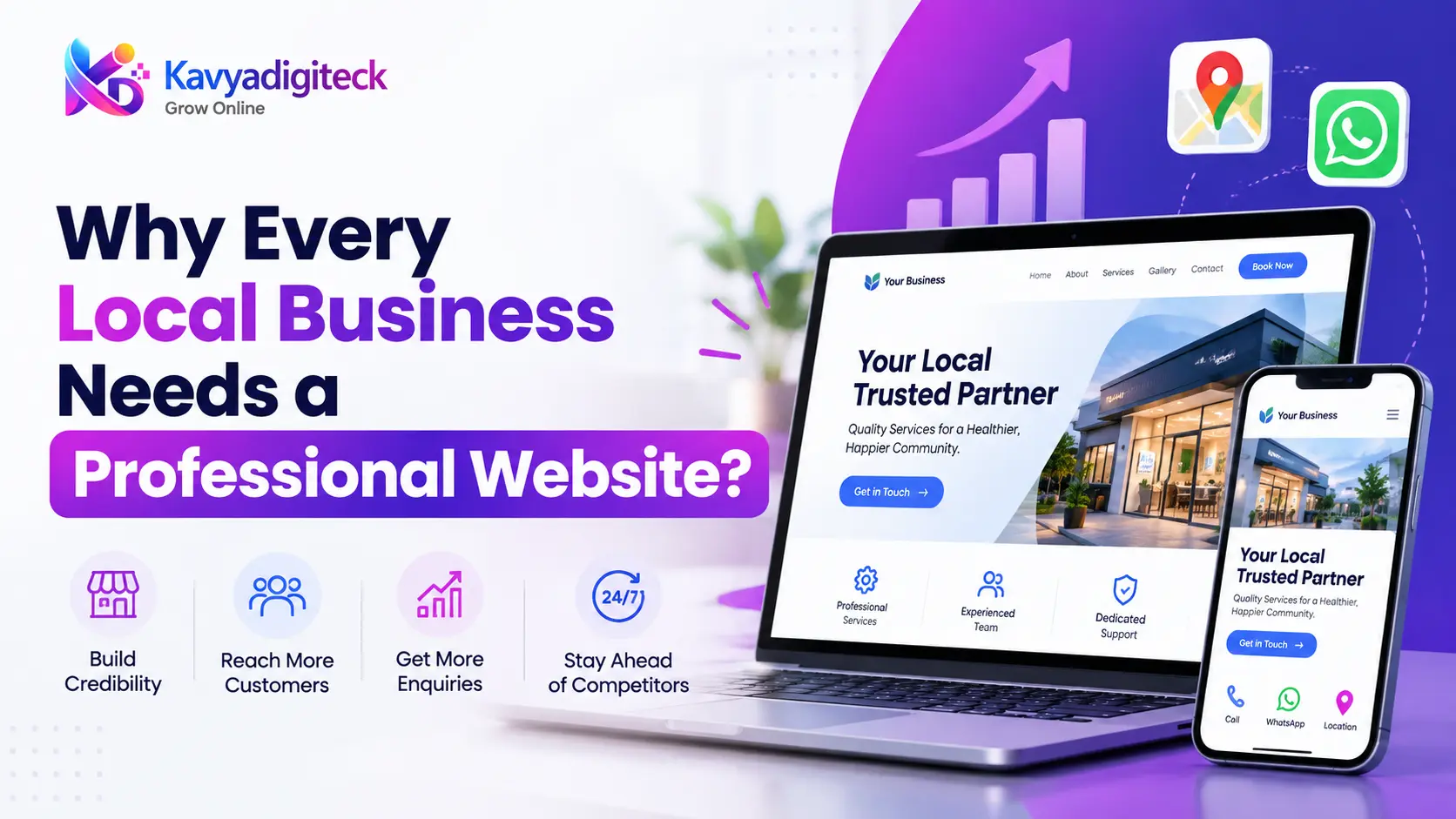
Think about the last time you needed a plumber, a dentist, or a new restaurant to try. Chances are you picked up your phone and searched online. Your customers do exactly the same.
If your business doesn’t show up, or shows up with only a social media page and a phone number, many people will simply choose a competitor who looks easier to find and easier to trust.
This article explains why a professional website matters for local businesses, what it should include, and how to get started without overspending.
1. Customers Search Online Before They Visit or Call
Today, people search first and decide later. They type things like “bakery near me” or “best electrician in [your town]” and pick from what they see.
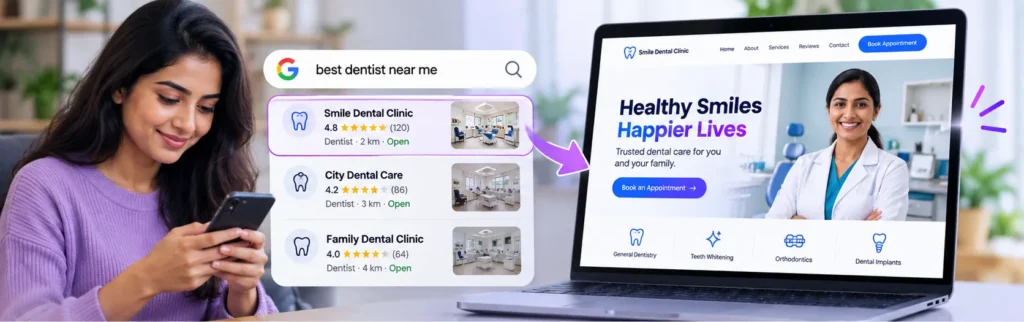
A website gives you a place in those results. Without one, you are depending on word of mouth alone. Word of mouth is valuable, but it has limits. Even people who hear about you from a friend will often search your name to check you out before calling.
If they find nothing, or something outdated, they may hesitate.
2. A Website Builds Trust Instantly
A professional website tells visitors that your business is real, established, and serious about its work.
It lets you show:
- Who you are and how long you have been in business
- Photos of your work, shop, or team
- Customer reviews and testimonials
- Clear prices or service details
- Proper contact information and address
Compare two businesses. One has a clean site with real photos and reviews. The other has only a half-complete social media profile. Most people will feel safer choosing the first.
3. You Get Found on Google (Local SEO)
Local SEO simply means helping your business appear when people nearby search for what you offer.
A website supports this in several ways:
- It gives Google more information about what you do and where you operate.
- It works hand in hand with your Google Business Profile, the listing that appears on Google Maps.
- It lets you create pages for each service or area, such as “AC repair” or “wedding photography,” so you can show up for specific searches.
Example: A small dental clinic with a page for “teeth whitening” and another for “root canal treatment” is far more likely to appear for those searches than a clinic with a single contact page.
4. Social Media Is Not Enough
Facebook and Instagram are useful for staying in touch with customers. But they are not a replacement for a website, because:
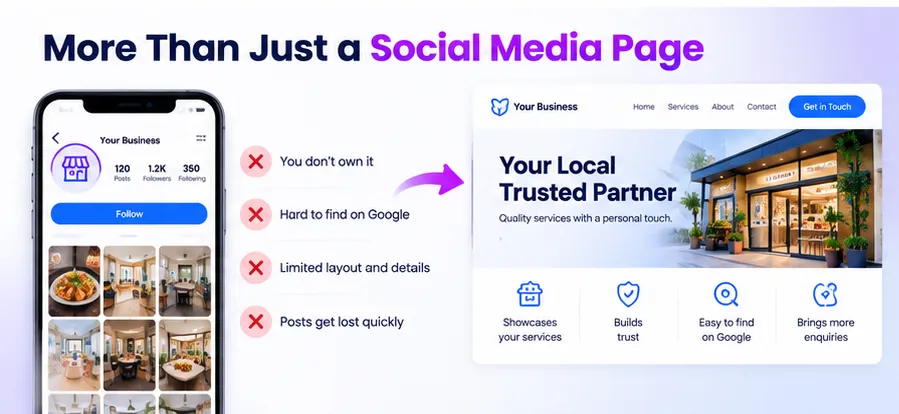
- You don’t own them. Algorithms change, reach drops, and accounts can be restricted or lost.
- They are hard to search. Many posts never show up on Google.
- They are limited. You can’t fully control layout, show detailed services, or guide visitors toward one clear action.
- They can look cluttered. Customers have to scroll through posts to find basic details like your hours.
The best approach is to use social media to attract attention and your website as the home base where people learn more and take action.
5. Your Business Is “Open” 24/7
Your shop may close at 8 p.m., but your website doesn’t. A customer can read about your services at midnight, check your address on a Sunday, or send an enquiry while you sleep.
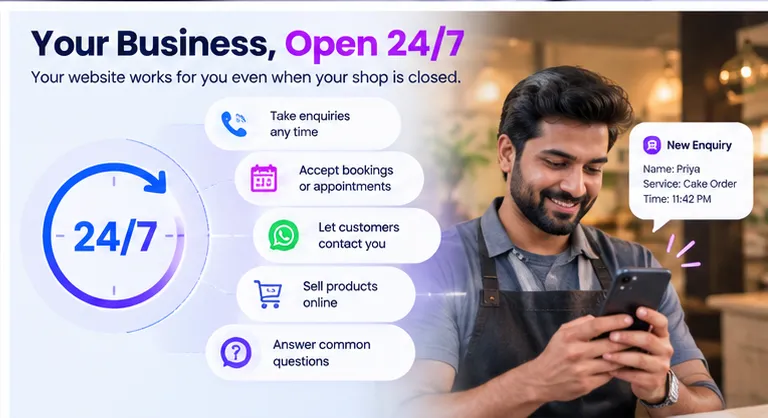
Depending on your business, your website can also:
- Take appointment or table bookings
- Accept enquiries through a simple form
- Let customers request quotes
- Sell products online
- Offer a click-to-call or WhatsApp button
This means fewer missed opportunities and fewer repetitive questions for you or your staff.
6. Most Visitors Will Be on Their Phones
For local searches, a large share of people browse on mobile. If your site loads slowly, has tiny text, or is hard to tap, visitors will leave quickly.
A professional website is designed to be mobile-friendly. That means:
- Text is easy to read without zooming
- Buttons are large enough to tap
- Pages load quickly
- Your phone number and map are one tap away
Google also prefers sites that work well on mobile, so this helps both customers and search visibility.
7. It Helps You Compete With Bigger Businesses
You may not have a large advertising budget, but a good website levels the playing field. A local business with a clear, well-built site can look just as credible as a larger competitor, and often more personal and approachable.
Your local knowledge, friendly service, and personal touch can shine through on your own website in a way that big chains can’t easily copy.
What a Good Local Business Website Should Include
A website doesn’t need dozens of pages. For most small businesses, these essentials are enough:
A Clear Homepage
Say what you do, where you do it, and how to contact you, all within the first few seconds.
Service or Product Pages
Give each main service its own page with simple descriptions, photos, and pricing where possible.
About Page
Share your story, experience, and what makes you different. People like to know who they are dealing with.
Reviews and Testimonials
Real feedback from real customers is one of the strongest trust signals you can offer.
Contact Details and Map
Include your address, phone number, opening hours, and an embedded map. Keep these consistent with your Google Business Profile.
Strong Calls to Action
Tell visitors what to do next: “Call now,” “Book an appointment,” or “Request a free quote.”
Common Mistakes to Avoid
Many local businesses have a website that isn’t working for them. Watch out for these problems:
- Outdated design or information. Old phone numbers or wrong hours damage trust.
- Slow loading. Large images and cheap hosting can drive visitors away.
- No clear next step. If people don’t know how to contact you, they won’t.
- Poor mobile experience. A site that only works on desktop loses many customers.
- Generic content. Copy-pasted text doesn’t help visitors or search engines. Write about your real services and your real area.
- Ignoring security. A secure site (HTTPS) protects visitors and shows professionalism.
Is a Professional Website Worth the Investment?
Think of it as a long-term business asset rather than a one-time expense. A good website keeps working every day: building trust, answering questions, and bringing in enquiries.
Even one or two extra customers each month can often cover the cost over time. And unlike many forms of advertising, you don’t have to keep paying for every visit.
When choosing a web designer or agency, look for someone who:
- Understands small and local businesses
- Explains things in plain language
- Shows examples of previous work
- Builds sites that are fast, mobile-friendly, and easy to update
- Offers support after the site goes live
Simple Steps to Get Started
- Claim your Google Business Profile if you haven’t already.
- List your main services and what customers ask you most often.
- Collect photos and reviews from your work and happy customers.
- Choose a clear goal for your website, such as calls, bookings, or sales.
- Work with a professional to design, build, and launch your site.
- Keep it updated with new offers, photos, and information.
Final Thoughts
For a local business, a professional website is no longer a luxury. It is how customers find you, check you out, and decide to trust you. Social media and word of mouth still matter, but a website brings them together and keeps your business visible around the clock.
If you are just getting started, begin simple and build from there. A clear, honest, well-designed site is far better than none at all.
In case you are a business owner or a professional and have made up your mind to have a website; feel free to Contact Us as we provide best of Services.